
AP Studio: Materials
Goals
- To better incorporate novel usage of materials or usage of novel materials to attain artistic ends such as contradicting, highlighting, exposing, revealing,… etc. in order to pursue an artistic idea (your Sustained Investigation inquiry.)
What do you think when you see this?
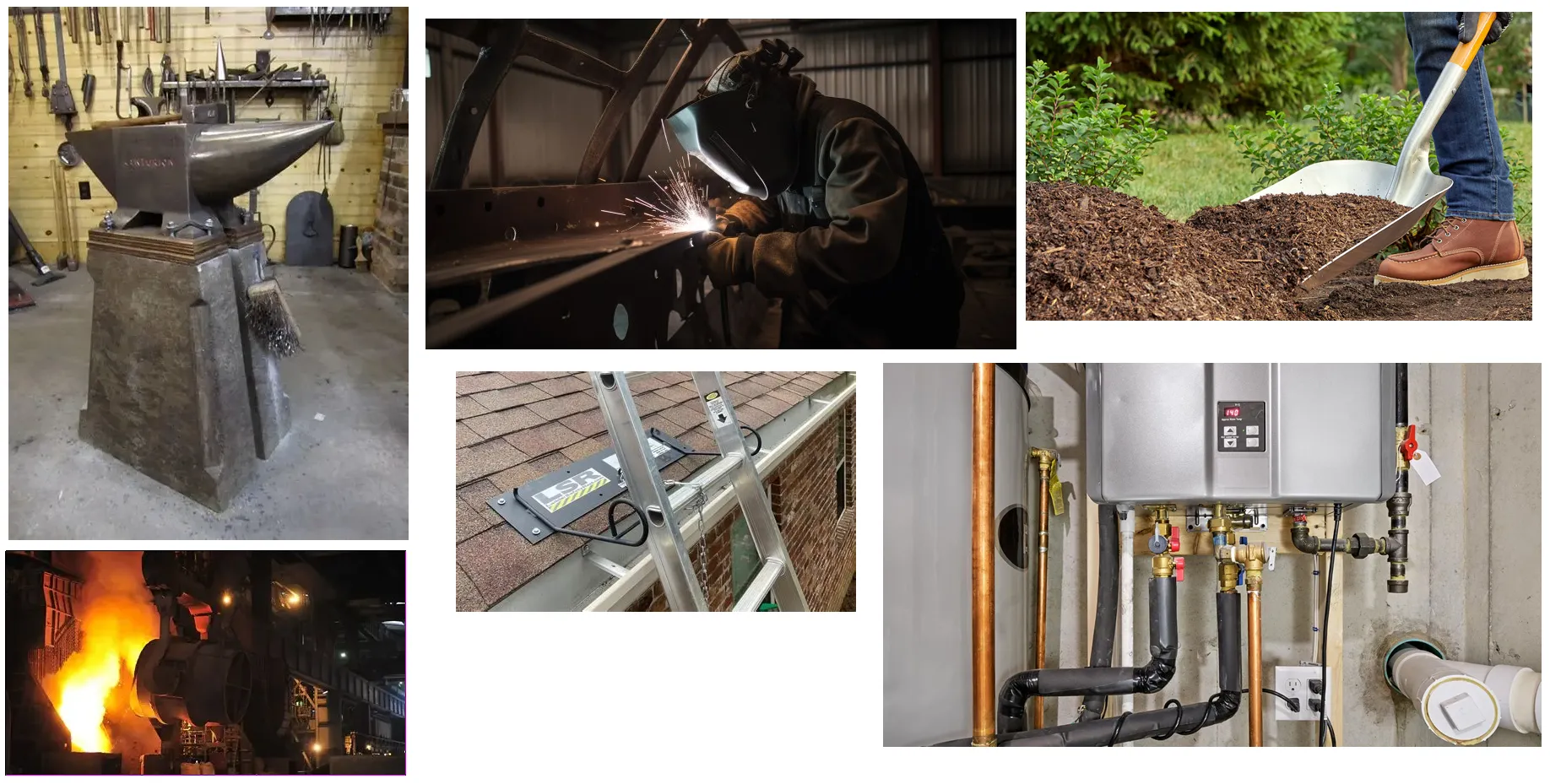 Keywords: Industrial, masculine, permanent, cold, destructive, labor.
What do you think when you see this?
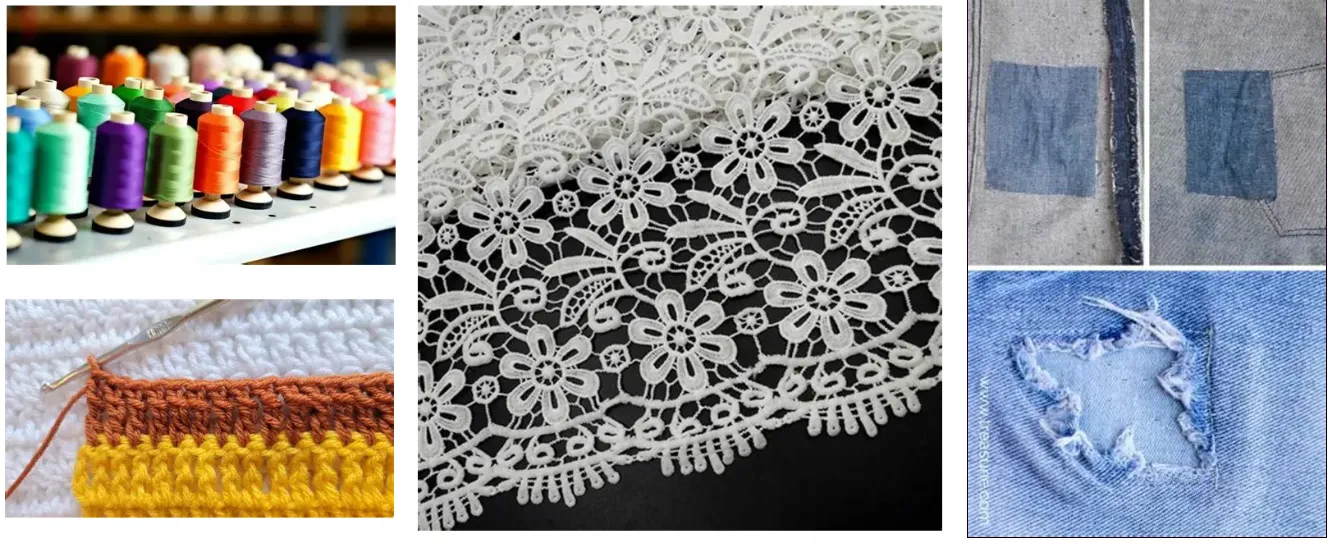 Keywords: Domestic, fragile, feminine, patient, heirloom, care.
And how about this?
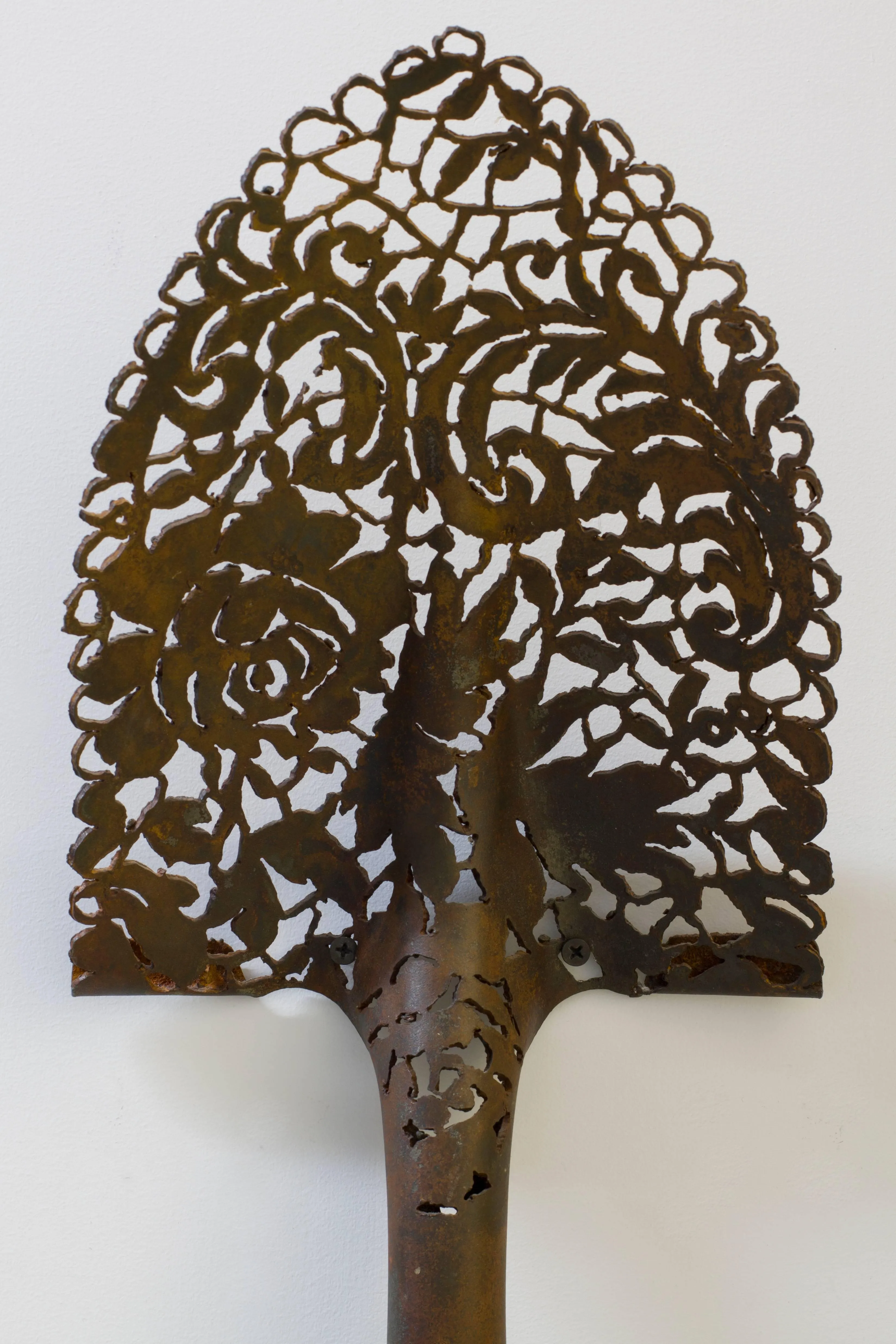
Cal Lane, Shovels. When you clash opposite material associations together, the material carries the artwork.
Consider the following…
If I asked a typical high schooler to make an artwork that tries to challenge our assumptions on men and women’s work or gender roles, what would they do?
I can tell you exactly what they would do, they would paint a picture of a man washing dishes, in an apron, or something similar to that effect.
BIG PICTURE
How can you say, what you want to say, but better, more effective, and more compelling?
What can I do to level-up my material usage?
Level 1: Contextual Tweaks (Low Effort, High Impact)
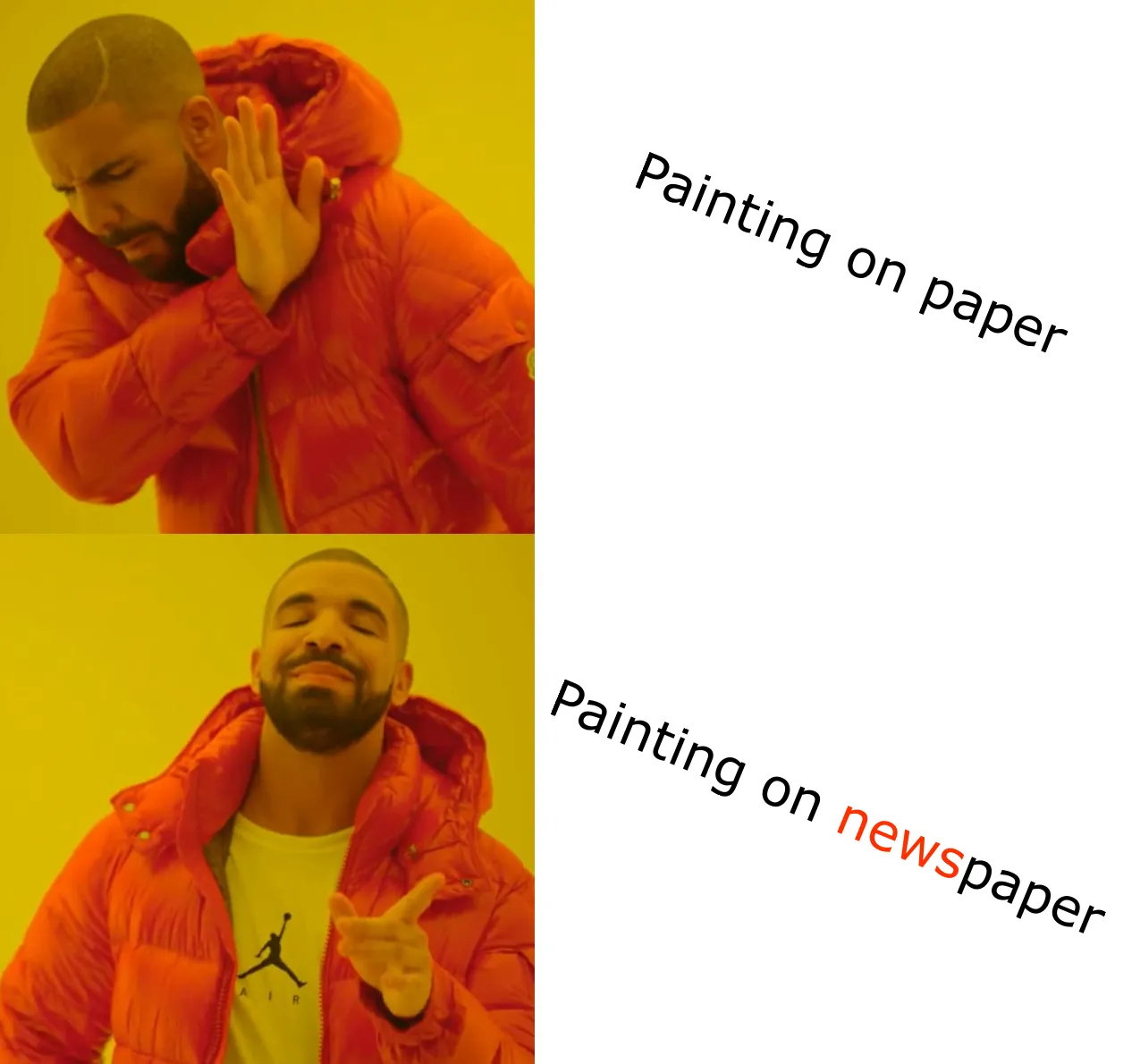
- Drake meme: Painting on plain cartridge paper (Nah) vs. Painting on financial newspaper / old family letters / cardboard boxes (Yah).
- Why it works: Immediate context shift without changing your core painting technique.
Level 2: Material as Message (High Effort, Direct Alignment)
- Using ocean plastic/trash to construct a sculpture about marine ecology.
- Why it works: The material literally embodies the problem you are investigating.
Student Example
This is from one of my students, who received a 100% score on their AP exam.
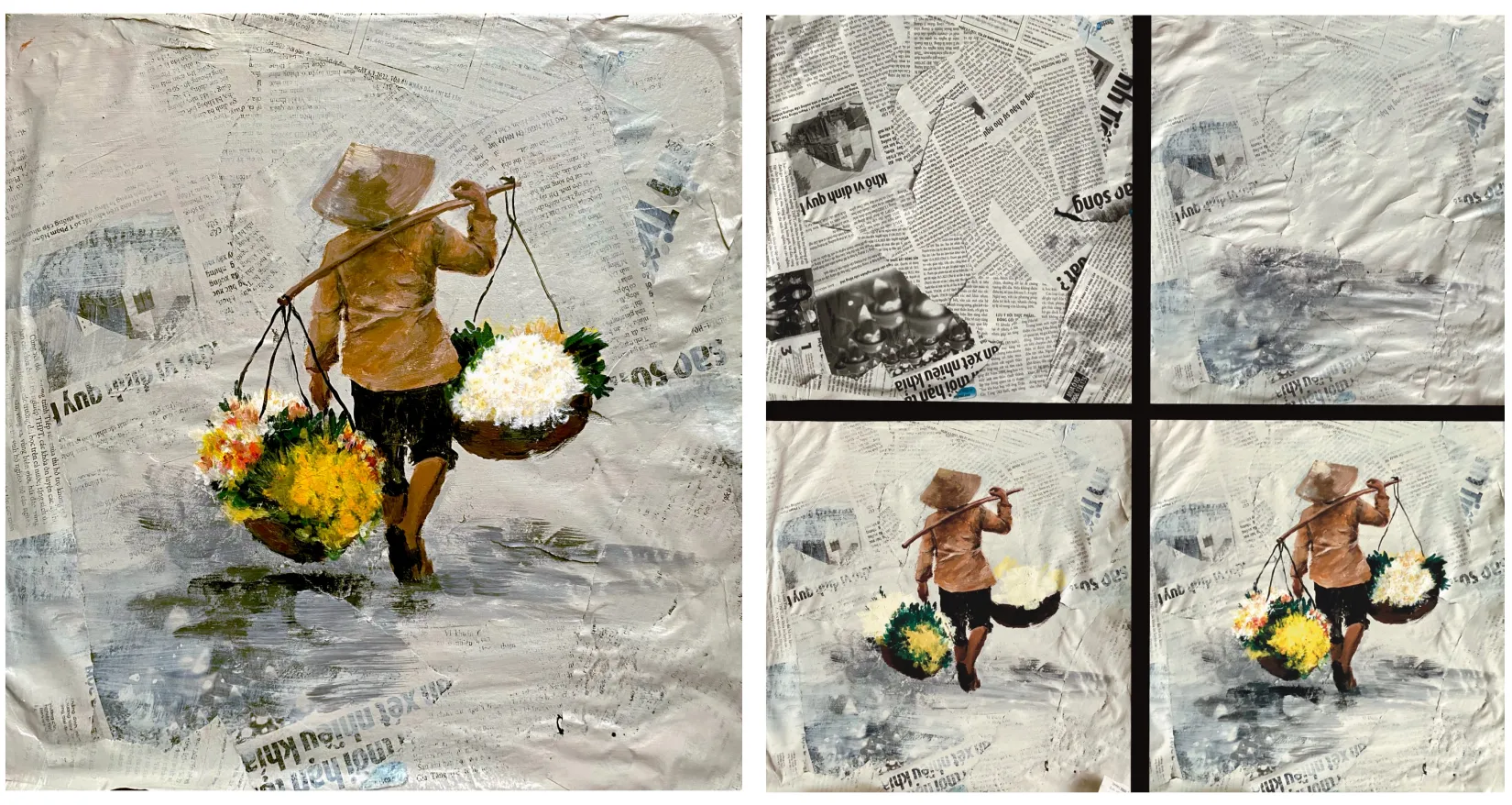
Imagine if this painting was done on normal white canvas. It would not be particularly interesting, probably quite generic even. If you want to the typical touristy stores in Hanoi, you would see many pictures with a figure exactly like this. However, the usage of the newspaper as a textural addition to the background gives it a way to comment on the passage of time. Now, this causes us to relate to the foreground figure in a different way that likely would not have been possible if it was painted on a grassy field background, for example.
This was a good move for this student’s portfolio because she wanted to contrast the life of contemporary Vietnamese women with that of traditional or stereotypical depictions. The time element that the newspaper brought to this piece directly gives her portfolio a bridge to talk about traditional versus contemporary.
Example from Internet
This is probably an overdone combination, but it’s an easy to understand example of the idea.
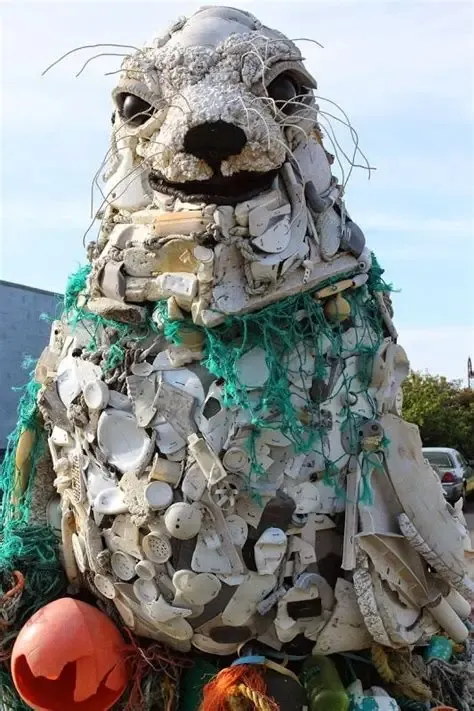
Sculpture of a presumably-soon-to-be-dead sea lion made with ocean trash, with its neck caught in a sea net.
How do artists think about their materials?
1. Materials as carriers of cultural significance
- In pre-agrarian societies, natural items (bones, specific plants, pigments) carried sacred or functional web of meaning. Today, everyday objects still carry cultural baggage—use it to your advantage.
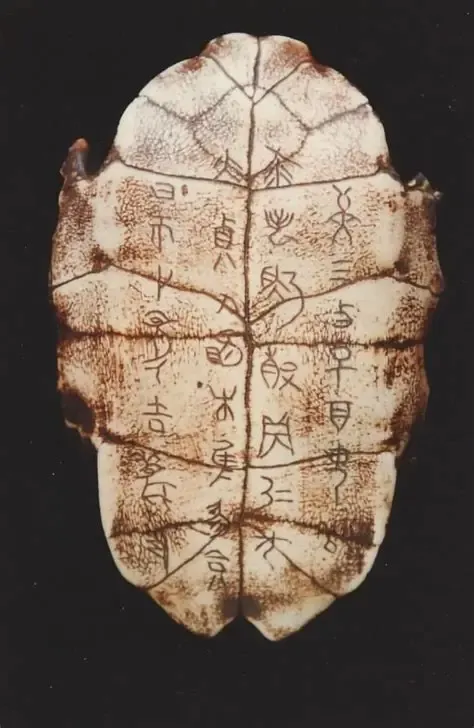
- Shang Dynasty Oracle Bones: Ancient Chinese diviners used turtle plastrons (undershells) for ritual prophecy not just because they were durable, but because the turtle’s anatomy was seen as a living model of the universe—the rounded carapace represented the dome of Heaven, and the flat plastron represented the Earth. Applying heat to crack the shell was seen as communicating through a physical microcosm of the cosmos itself.
2. Materials as drivers of technique
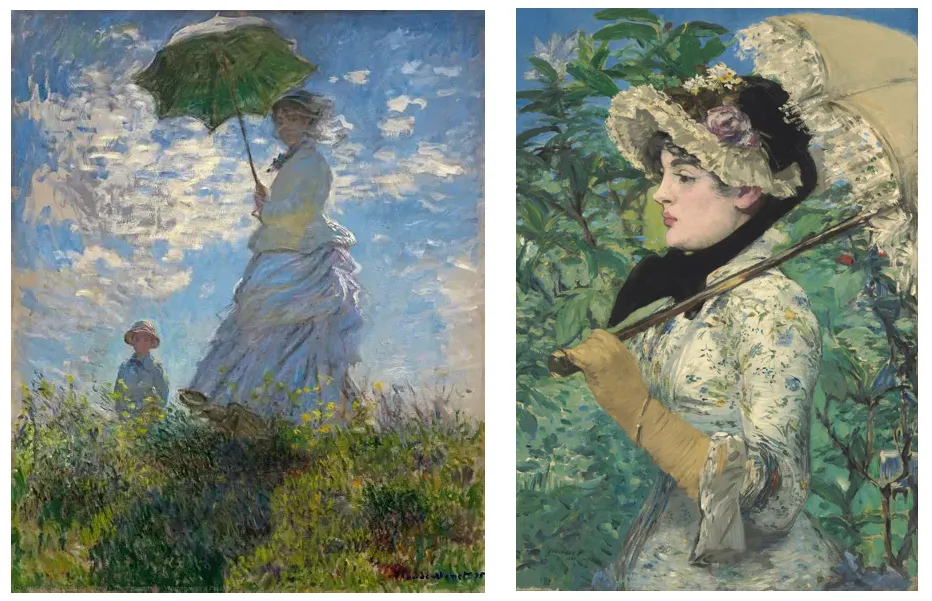
- Technology dictates visual style. The invention of the collapsible paint tube and metal ferrule in the 1840s allowed the Impressionists to leave the studio and capture fleeting light en plein air.
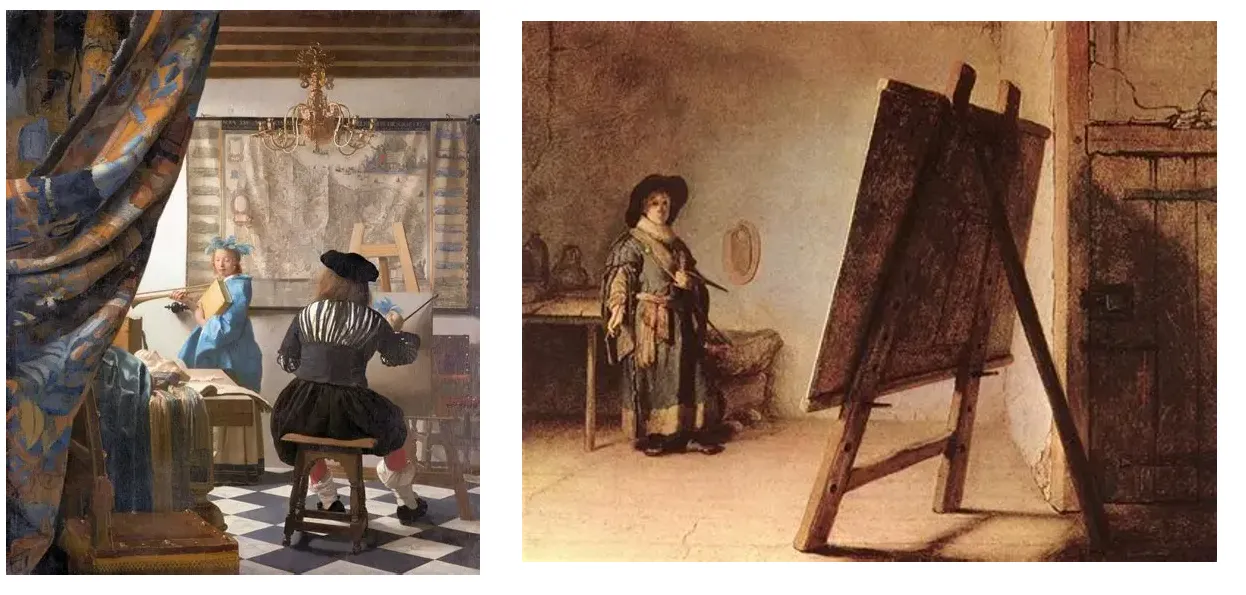
3. Materials as signs & symbols (Semiotics)
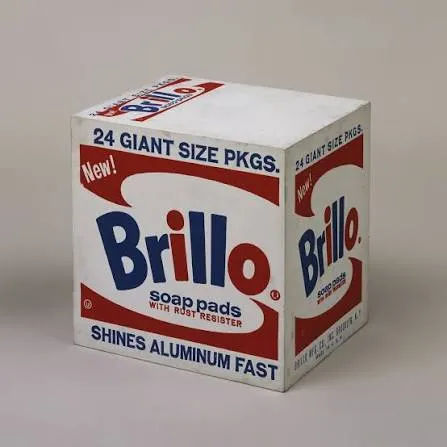
- High/Low Culture: Andy Warhol’s Brillo Box turned a cheap grocery store cleaning pad into high-art commentary.
- Historical Baggage: Choosing oil paint on linen isn’t just about smooth blending; it carries 500 years of Western art history, power, and prestige. Choosing gouache on scrap cardboard carries grit, immediacy, and accessibility.
Student Action Step: The Material & Process Matrix
Now it is time to apply this to your own portfolio. Grab your sketchbook and complete the following four steps:
Step 1: Write Your SI Inquiry Topic
Write down your current Sustained Investigation inquiry question or topic at the top of the page in 1–2 sentences.
Step 2: Material Brainstorm
Brainstorm and list at least 10 materials that have any connection to your topic (direct, symbolic, historical, or emotional).
- Think beyond paint and paper: Consider substrates, everyday objects, discarded items, textiles, organic materials, or structural elements.
Step 3: Process & Action Brainstorm
For each material on your list, write down every physical action, mark-making method, or process associated with it (or with your practice in general).
- Action verbs: Stitching, burning, tearing, laser-cutting, diluting, layering, carving, staining, erasing, weaving, melting, or stamping.
Step 4: The Synthesis Pairing
Pick ONE material and ONE process from your lists, then answer these two reflection prompts:
- Material Associations: Beyond just your SI topic, what cultural, historical, or personal baggage does this specific material carry?
- Process Meaning: What does the physical act of performing this process communicate to the viewer? (e.g., Does tearing suggest destruction or revelation? Does stitching suggest healing, domesticity, or repair?)
The Goal
If your chosen material and process actively tell the story of your SI topic before you even draw or paint a single subject on top, you have successfully achieved synthesis.
Artists to Look At
1. El Anatsui (Materials as History & Global Trade)
- Materials: Recycled aluminum liquor bottle tops bound with copper wire.
- Why look at him: He transforms discarded trash into massive, shimmering metallic tapestries. The bottle caps directly link to European trade routes, slavery, and global consumption in West Africa.
2. Nick Cave (Process as Armor & Movement)
- Materials: Found objects, buttons, beads, sisal, hair, and thrifted trinkets.
- Why look at him: Created his first Soundsuit in response to the Rodney King beating in 1991. The suit acts as a second skin that hides race, gender, and class, transforming the wearer into a loud, rustling sculptural presence that demands space.
3. Doris Salcedo (Materials as Memory & Grief)
- Materials: Wooden domestic furniture, concrete, human hair, and used clothing.
- Why look at her: Salcedo fills old chairs and wardrobes with solid poured concrete. By disabling functional everyday objects, the material physically embodies the weight of loss, violence, and absence.
4. Chiharu Shiota (Process as Interconnectedness & Anxiety)
- Materials: Hundreds of miles of black or red yarn woven through spaces, trapping personal items (keys, letters, boats).
- Why look at her: The obsessively repeated action of wrapping and tying thread creates a physical web of thoughts, memory, and spatial relationships.